
The Higher Objectives of Humanity
- Regular price
- RM 45.00
- Sale price
- RM 45.00
- Regular price
-
RM 0.00



Share
The HigherObjectives of Humanity
Author: DrAzman Hussin
Publisher: LeadUS
ISBN: 9781539004110
Year: 2017
Weight: 0.435kg
Pages: 346 pp
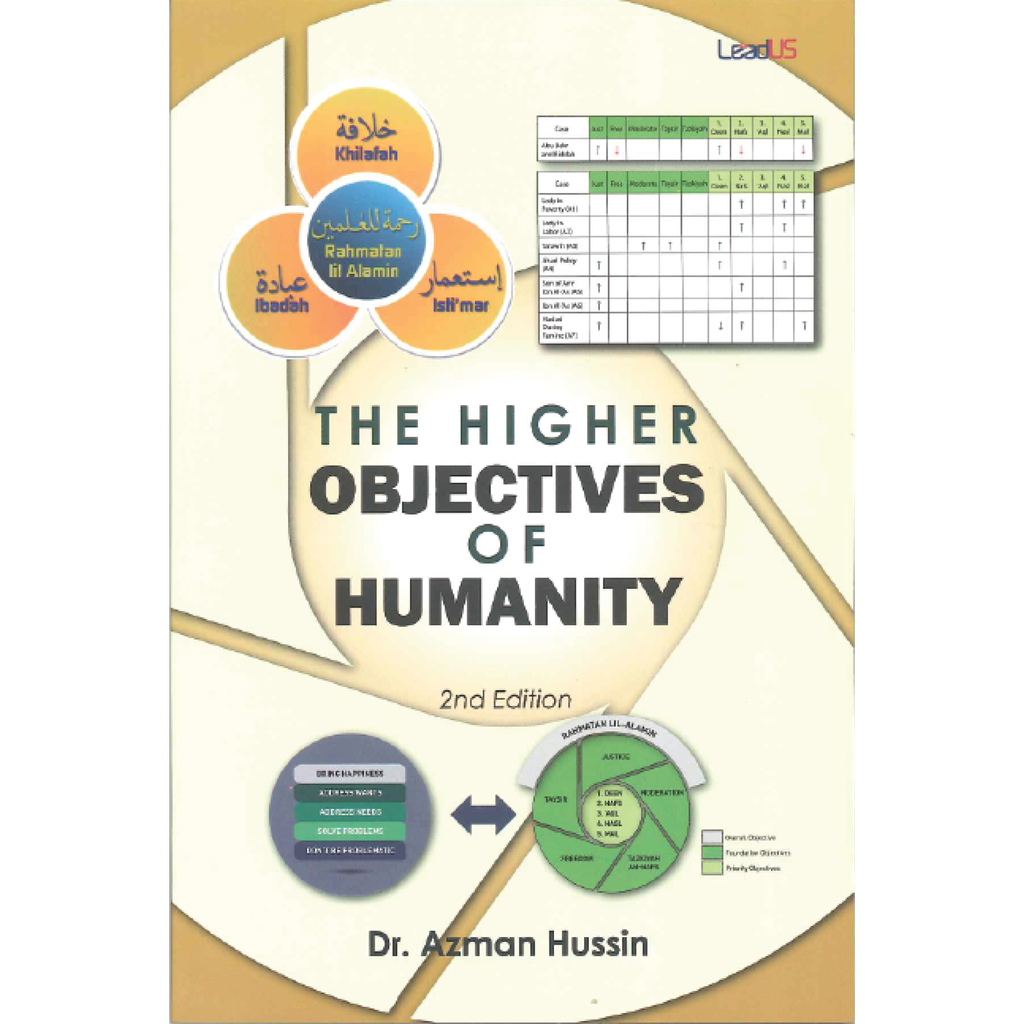
This book discusses the why, what and how of Rahmatanlil-Alamin as the higher objective of humanity. It presents a practicalunderstanding of the purpose of creation and humanity to improve the individualand collective well-being of Muslims and society. The intention is tore-introduce and re-emphasize the correct Islamic perspective of humanity. Thefirst five chapters revisits the common understanding among Muslims as to whymankind is created. We show that the prevalent view that we are created toworship Allah (SWT) is incomplete.
There is a higher and more noble purpose;Rahmatan lil-Alamin (mercy to the worlds). We next describe the what ofRahmatan lil-Alamin. The best role model of Rahmatan lil-Alamin is undoubtedlyProphet Muhammad (SAW), the last and final prophet and messenger, whom Allah(SWT) sent with a very clear purpose, “And We have not sent you but as a mercyto the worlds.” [21:107].
We present many examples from the history of ProphetMuhammad (SAW) and a collection of his (SAW) sayings and advice on being thebest. The final chapters of the book deal with the how of Rahmatan lil-Alamin.We describe in detail how the Muslim can apply Rahmatan lil-Alamin daily in hisor her life. We propose a practical model of Rahmatan lil-Alamin that weinduced from the Quran. We also addressed how to apply Rahmatan lil-Alamin to abroader society by proposing a decision-making tool that can guide us aspersons and as communities to make decisions that conform to the foundationsand priorities of Rahmatan lil-Alamin. We present case studies from the historyof the Companions using this decision-making model.
This book seeks toestablish a connection between Islam and civilization within a civilizationaland ethical framework. We believe that a more proper and complete understandingof the Islamic view about humanity may present to us new perspectives of Islamand how Muslims should engage with fellow Muslims and people of other faiths.In fact, the implication of this new reinterpretation framework goes evenfurther in that: any human civilization built on this framework is the mostprosperous for the whole and also for the